Zemira and Azor
Grétry
Information
Fairytale magic meets glorious music – fall under the spell of Zemira & Azor this summer! Grétry’s sparkling yet serious comedy, based on the much-loved story of Beauty and the Beast, won over countless hearts through the final decades of the 18th century, including that of Mozart. Now rarely performed, Bampton presents a unusual edition from Mannheim with added music by Niccolò Jommelli. Performances will be in a new lively English translation, semi-staged and costumed, with orchestra, at a delightful new Oxfordshire venue at Cokethorpe, south of Witney, as well as our regular venues in Westonbirt and London.
A virtuous and beautiful young woman, Zemira, takes her father's place as a prisoner in the magical castle of the monstrous Azor, whose beastly form results from a spell cast by a malevolent fairy. Zemira is horrified when she first encounters Azor, but manages to see past his hideous exterior to his inner dignity and nobility. Can her simple love transform a beast?
Cokethorpe School, Witney, Oxfordshire OX27 7PU: Friday 17, Saturday 18 July (7pm)
Westonbirt School, Gloucestershire GL8 8QG: Monday 31 August (5pm)
Smith Square Hall, London SW1P 3HA: Friday 18 September (7pm)
Conductor: Andrew Griffiths
Director: Jeremy Gray
Booking is now open.
Picnics are welcome at our country venues – pre-performance at Cokethorpe and during the long interval at Westonbirt.
Pre-prepared picnics are available to order: information will be set out with tickets.
...varied and lustrous textures
Classical Source 31st August 2026
This year’s offering by Bampton Classical Opera – Grétry’s Zemira e Azor – could almost be an allegory for the present situation in Iran, albeit that in this version of the Beauty and the Beast story, partly set in the Strait of Hormuz, Azor is a cursed prince of Persia, not an orange-coloured monster of the West. The story doesn’t seem entirely true to life in 2026 however, in that Azor is redeemed by Zemira’s love because she recognises an underlying nobility and dignity behind his bestial appearance. Although the fate of nations and the world economy are not at stake in the opera, the predicament of Azor’s curse is such that when the shipwrecked merchant of Hormuz, Sandro, approaches the prince’s palace and plucks a rose for his daughter Zemira, he must pay for that indiscretion either with his own life or with that of any of his three daughters who will stand as the sacrifice in his place. It is Zemira who takes up the challenge, instead of her two more streetwise, utilitarian sisters Fatima or Lesbia.
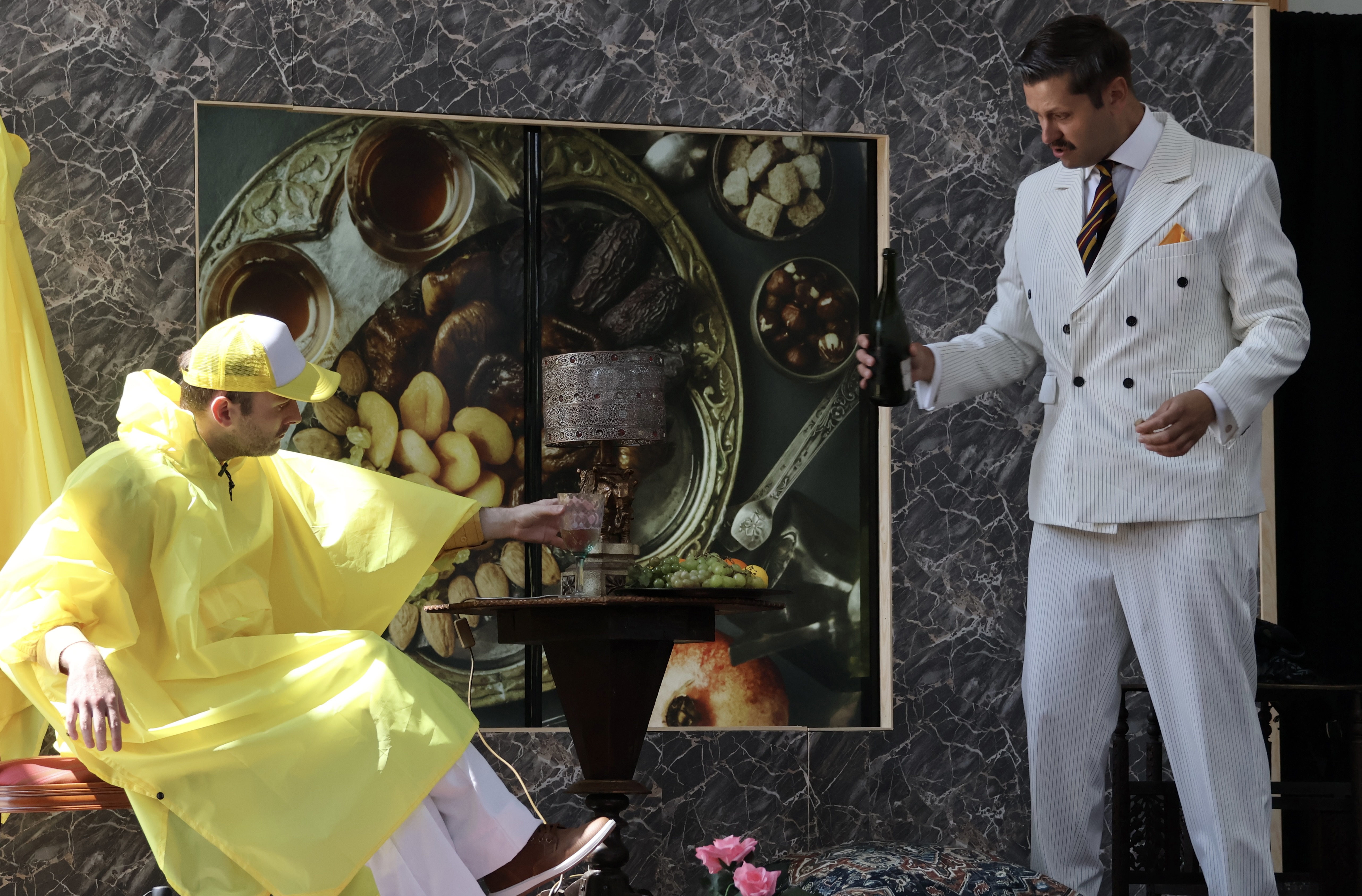
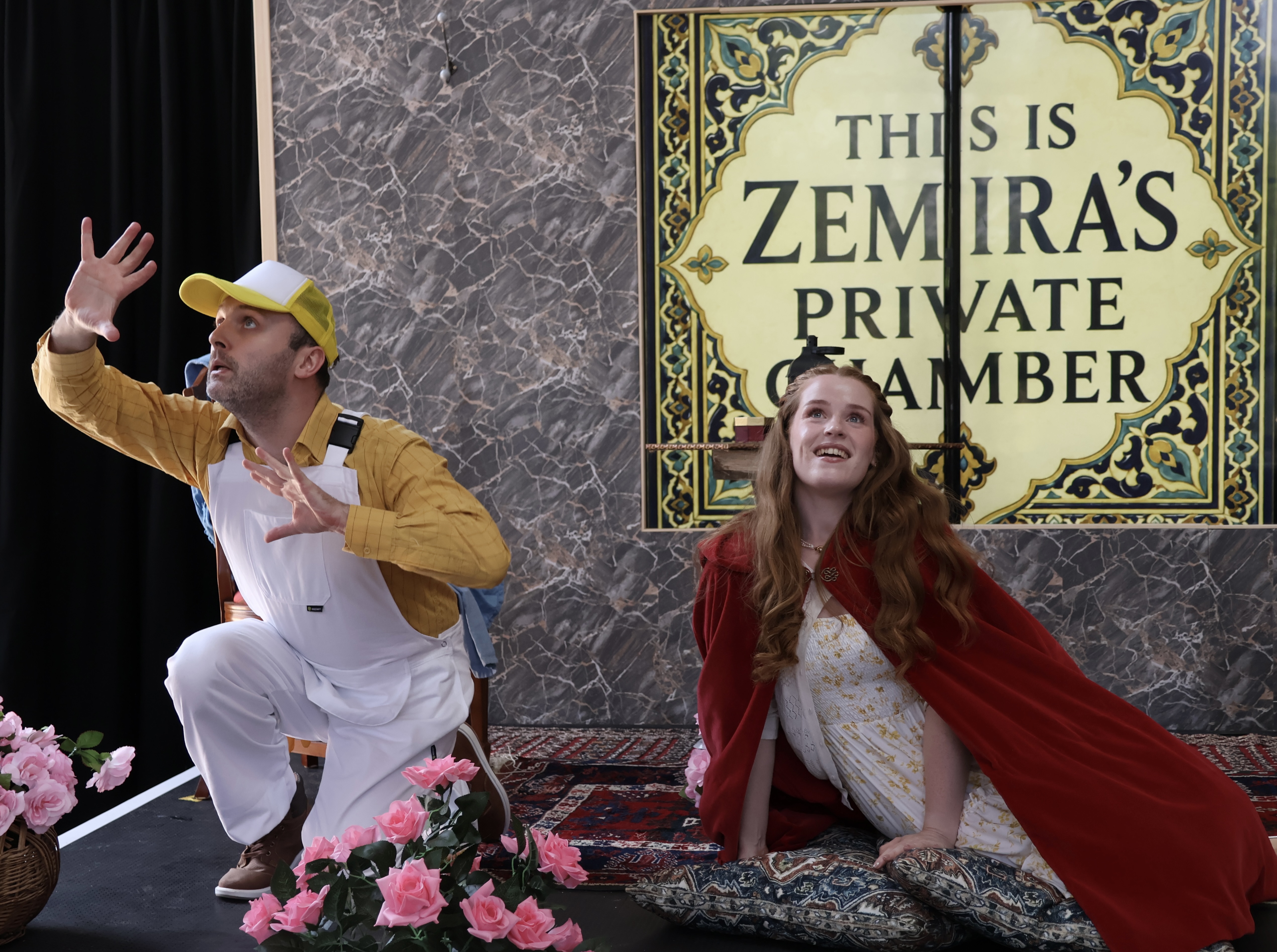
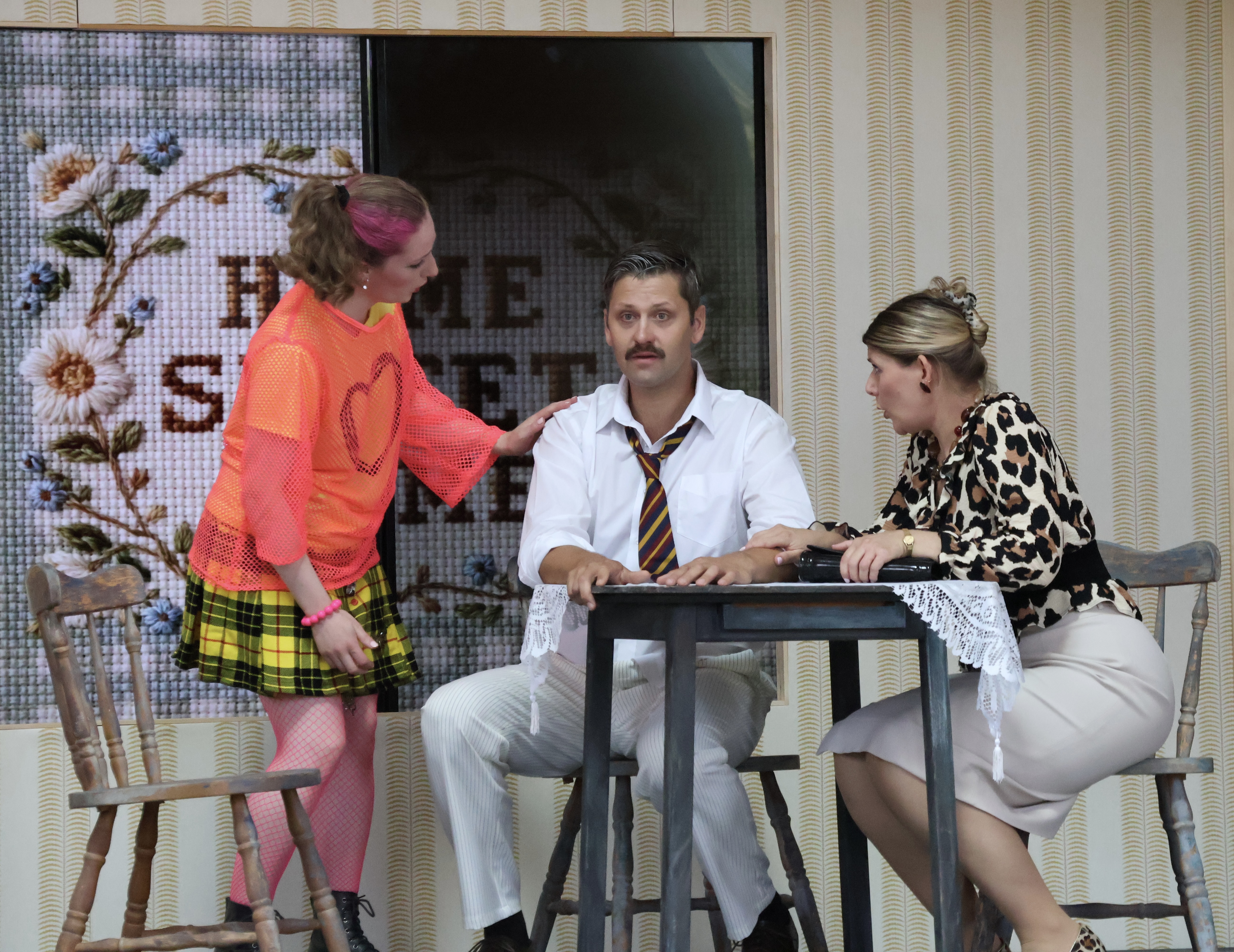
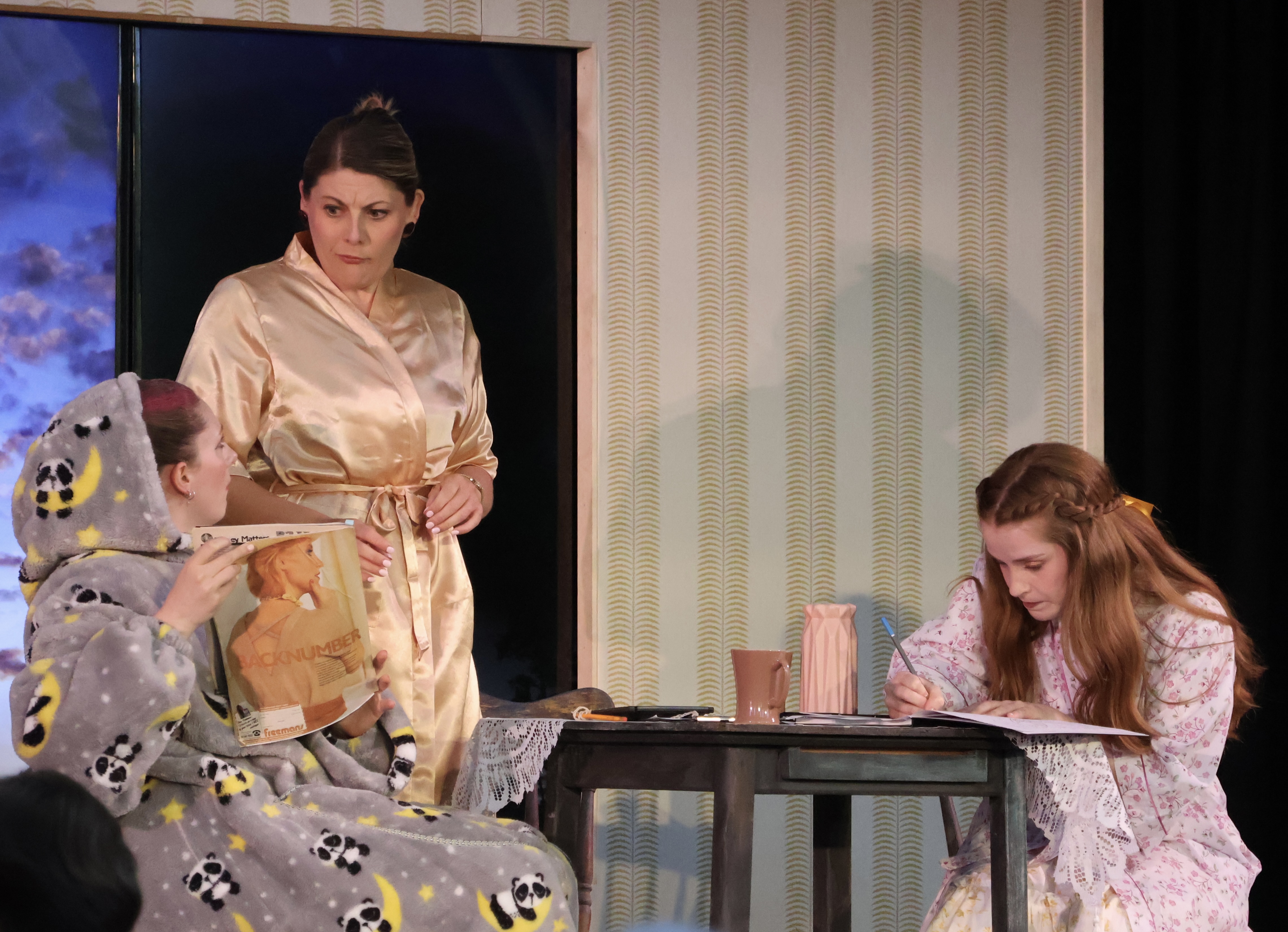
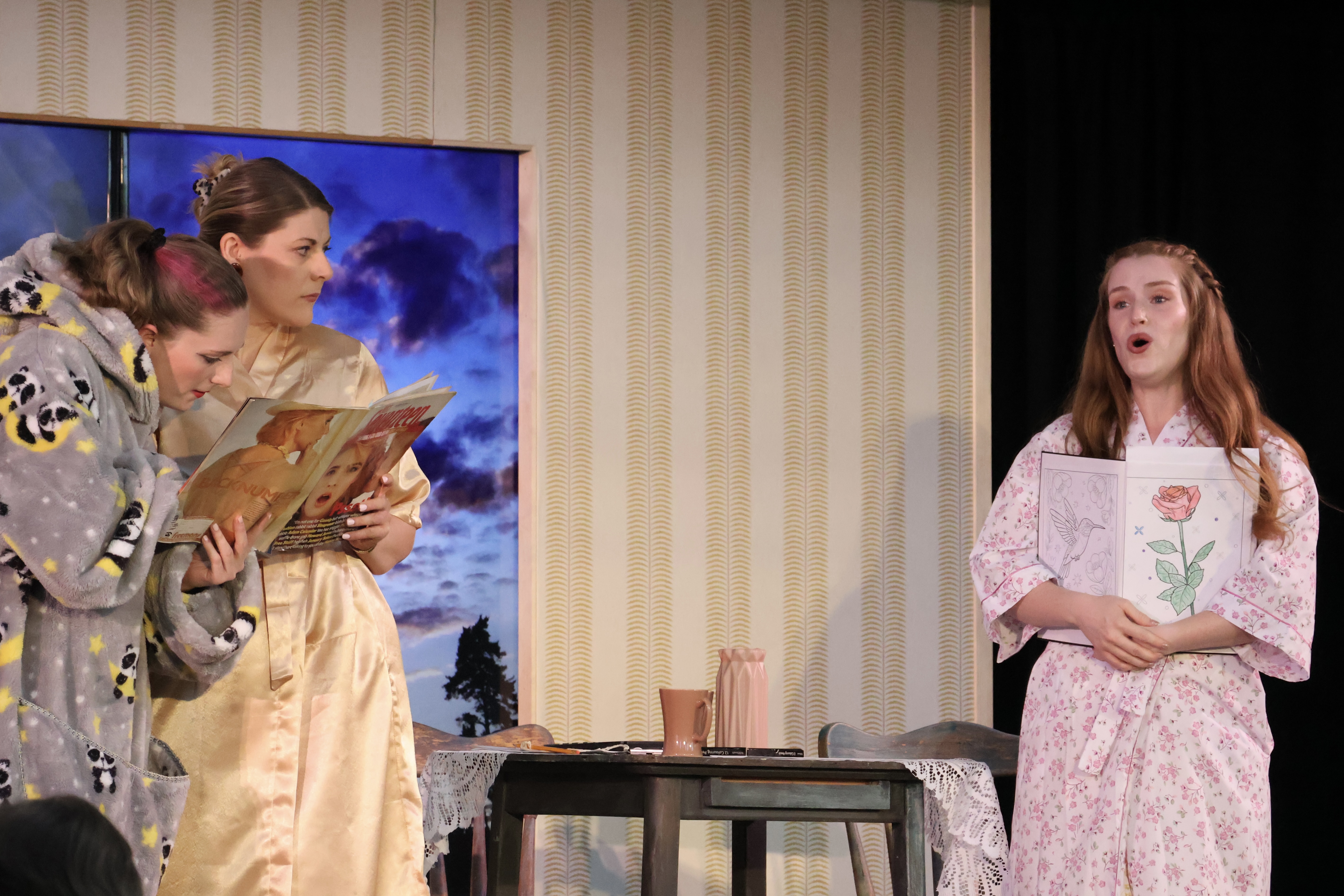
Mixed in with the story are certain elements of other fairy tales or legends, such as Zemira’s less than sympathetic pair of sisters like the wicked stepsisters of Cinderella; and the theme of Azor languishing under a curse until the love of a virtuous woman redeems him is akin to the story that inspired Wagner’s The Flying Dutchman. Jeremy Gray’s production, set in contemporary times, happens to draw an affinity with the latter since, like Senta who is fixated by the image and idea of the wandering Dutchman before he actually arrives, Zemira and her sisters contemplate a pop-up book of the fairy tale of ‘Beauty and the Beast’, as though the template which prepares Zemira for her future destiny. They inhabit a primly proper home at one side of the stage, contrasting with Azor’s palace at the other, where the blue floral patterns of Ottoman Iznik tiles and pottery allude in general terms to the opera’s Middle Eastern (even if not specifically Persian) setting; and a feast of dried fruit and nuts is laid out.
Orientalist representations are otherwise helpfully avoided, and Azor’s power of magically conjuring up images of Sandro’s home to the merchant and Zemira in turn is successfully rendered by means of rational 21st century technology by way of video projections on screens, where other visual displays also enhance other aspects of the drama beyond the set physically laid out on stage. That all works effectively in an opera which, despite the fantastical elements and the alternation of distant locations, bears essentially the same domestic character as any other 18th century opéra comique or opera buffa.
The performers give a spirited account of a lively work whose music is more Italian in style than French, although this later version with sung recitatives (rather than the spoken text of the 1771 French original) and some interpolations by Jommelli and Holzbauer help. Nevertheless, among Grétry’s original numbers is the striking Act Three coloratura aria ‘La fauvette’ in which birds are imitated in the obbligato flute part and long florid cadenza for the voice – one wonders whether Mozart had this virtuoso aria in mind when writing ‘Martern aller Arten’ in The Abduction from the Seraglio. Ffion Edwards delivers it with a fine balance between agility and levity, not overwhelming the music with excessive force, but registering as a sudden, vivid expression of passion on the part of Zemira. That registers as such, even after the arresting opening scene of the same Act, in which Azor soliloquises on his dual nature – as civilised human and untamed beast – in a gripping sequence of accompanied recitative and aria that bears all the hallmarks of the Sturm und Drang. Gwilym Bowen ably conveys the character’s frustration in being torn between loving tenderness and bestial rage.
Despite Sandro’s desperate situation, Samuel Pantcheff plays the part equably, while Andrew Irwin is much more voluble and volatile as his servant Alì, in the typical strain of such characters in 18th century comedies. Irwin doubles up as the fairy at the conclusion when the curse on Azor is lifted. As the two sisters, Siân Dicker and Rachel Roper are an impish pair, the former showing a harder edge than the more nobly forbearing Zemira.
Andrew Griffiths leads the Orchestra of Bampton Classical Orchestra in an alert performance where strings are to the fore, but they create some varied and lustrous textures despite their small numbers, for instance in the airborne suspensions as Sandro and Alì are flown home on clouds at the end of Act One. Horns add notable colour to the odd other number, and Alex Norton provides dependable support on the harpsichord. Bampton have unearthed another rarity from the large pool of forgotten 18th century repertoire. This has a score of more than passing interest which is delivered here, alongside the production, with avidity.
an interpretation informed as much by disciplined energy as by elegance
Opera October 2026
A house on the Strait of Hormuz is one of the two alternating locations in Grétry’s Zémire et Azor. Wisely, though he favoured modern dress in his production, Jeremy Gray did not attempt to impose geopolitics on this charming take on Beauty and the Beast. The rest of the opera takes place in the ‘fairy palace’ where Azor, the Beast, seeks to ingratiate himself with the lovely and brave Zémire. In the high-ceilinged dining hall of Cokethorpe School - a new venue for Bampton Classical Opera after nearly 40 productions - each location occupied its own small stage and the conductor, Andrew Griffiths, and 17 instrumentalists were flanked by the scenic action. Azor’s taste seemed to run to glossy contemporary chic, but the dominant feature of his home was a large video screen. Initially, it displayed decorative Middle Eastern motifs and in Act 3 it conjured up the ‘magic picture’ (a theatrical effect admired by Marie Antionette when she saw the opera) that Azor uses to show Zémire her faraway family.
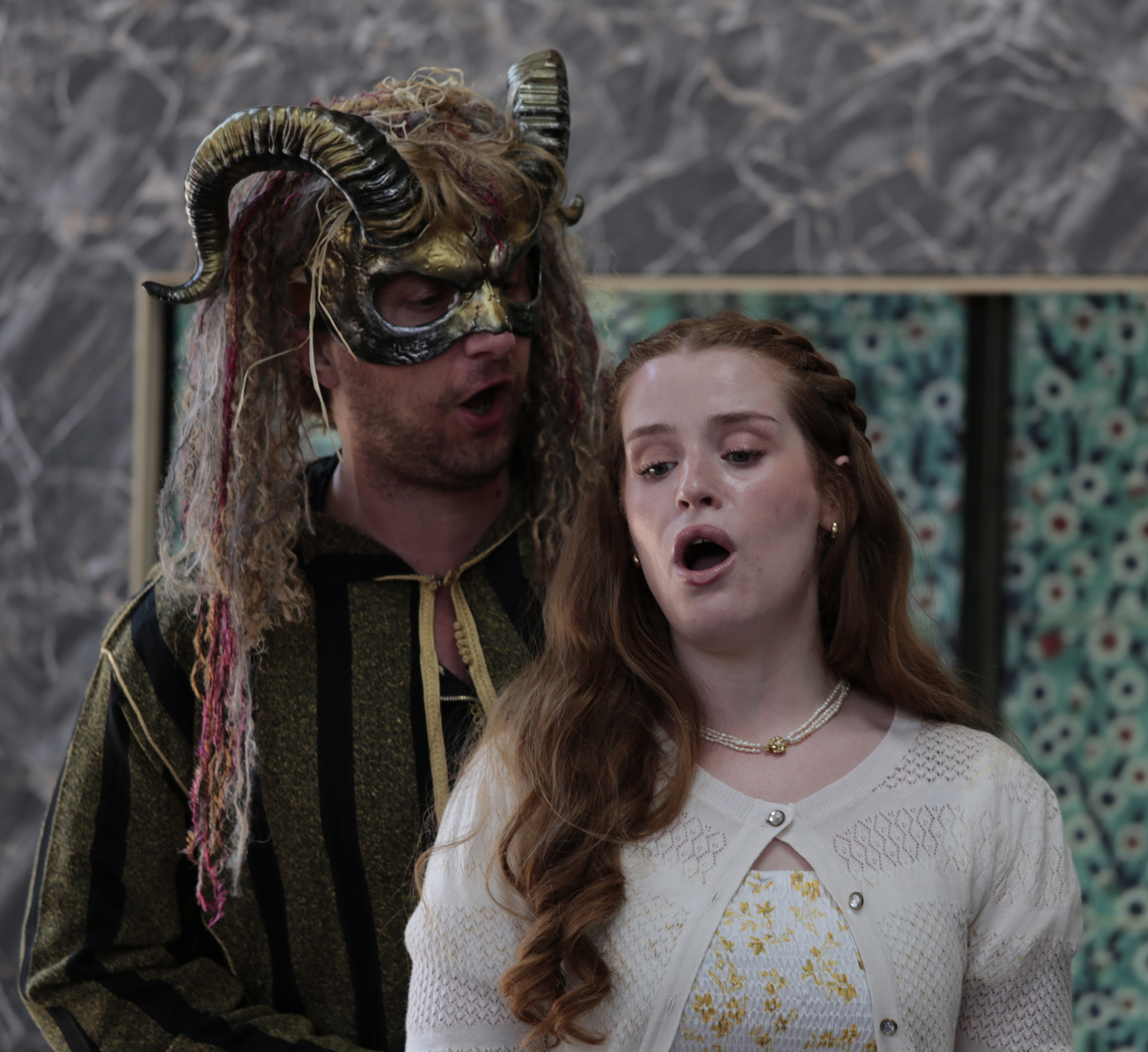
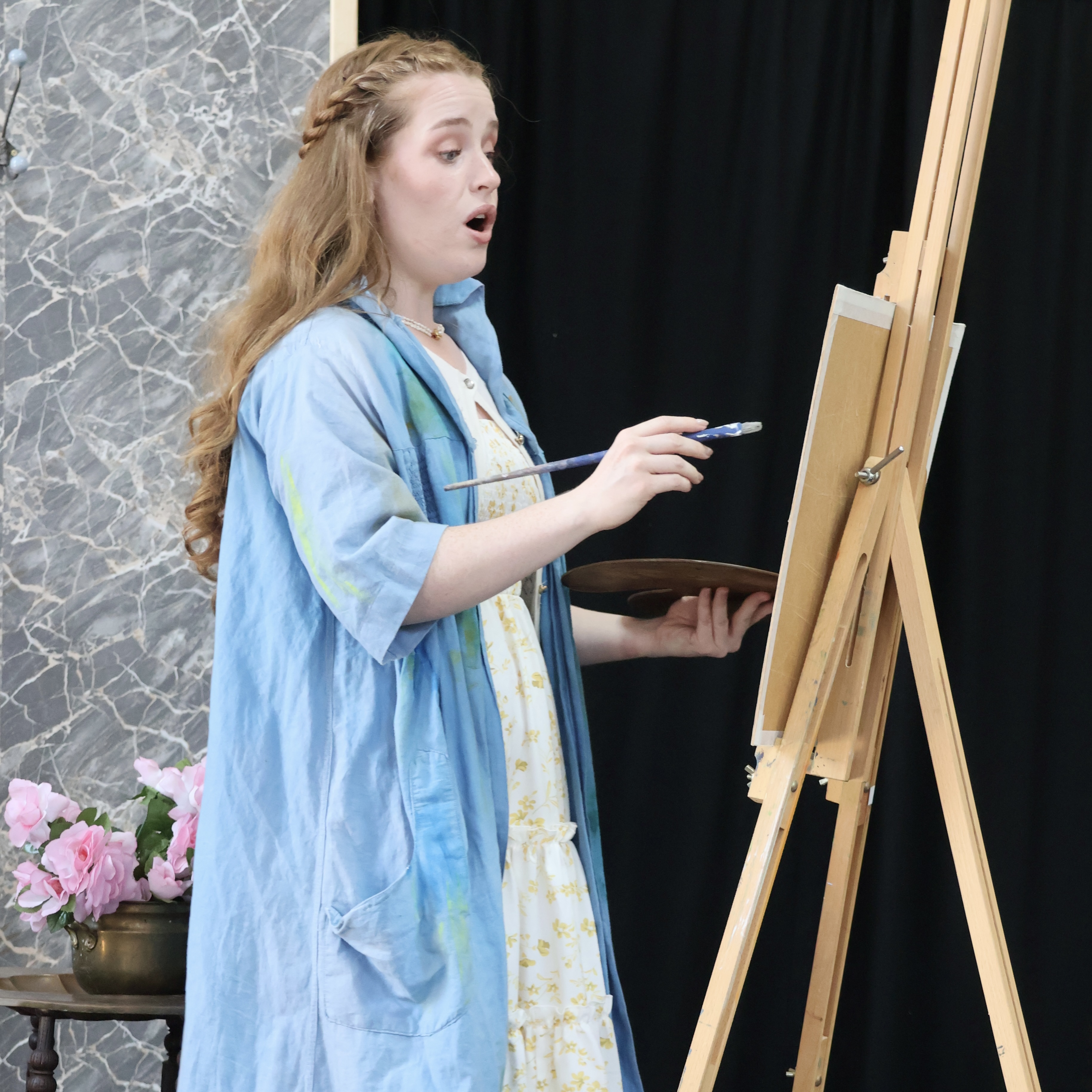
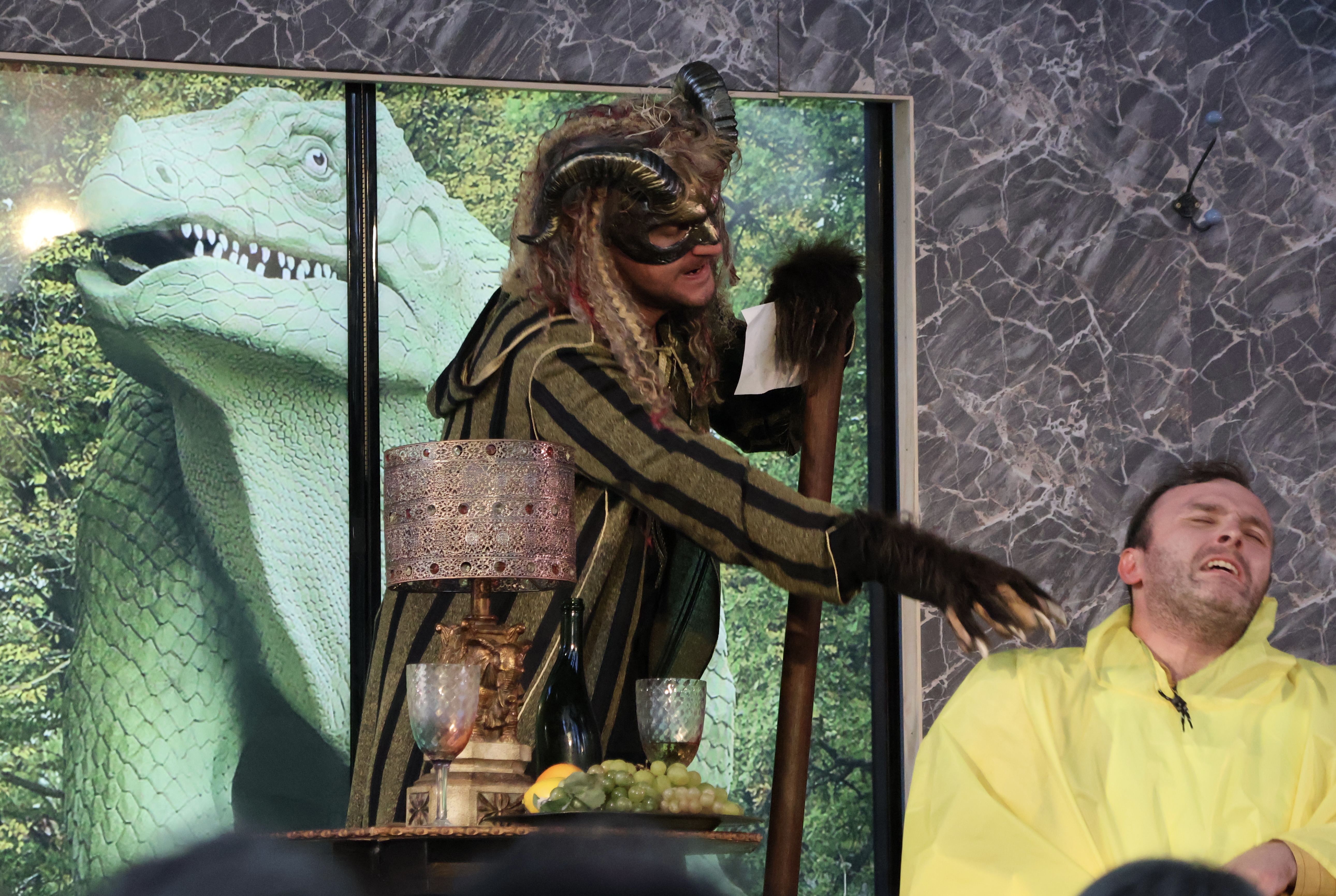
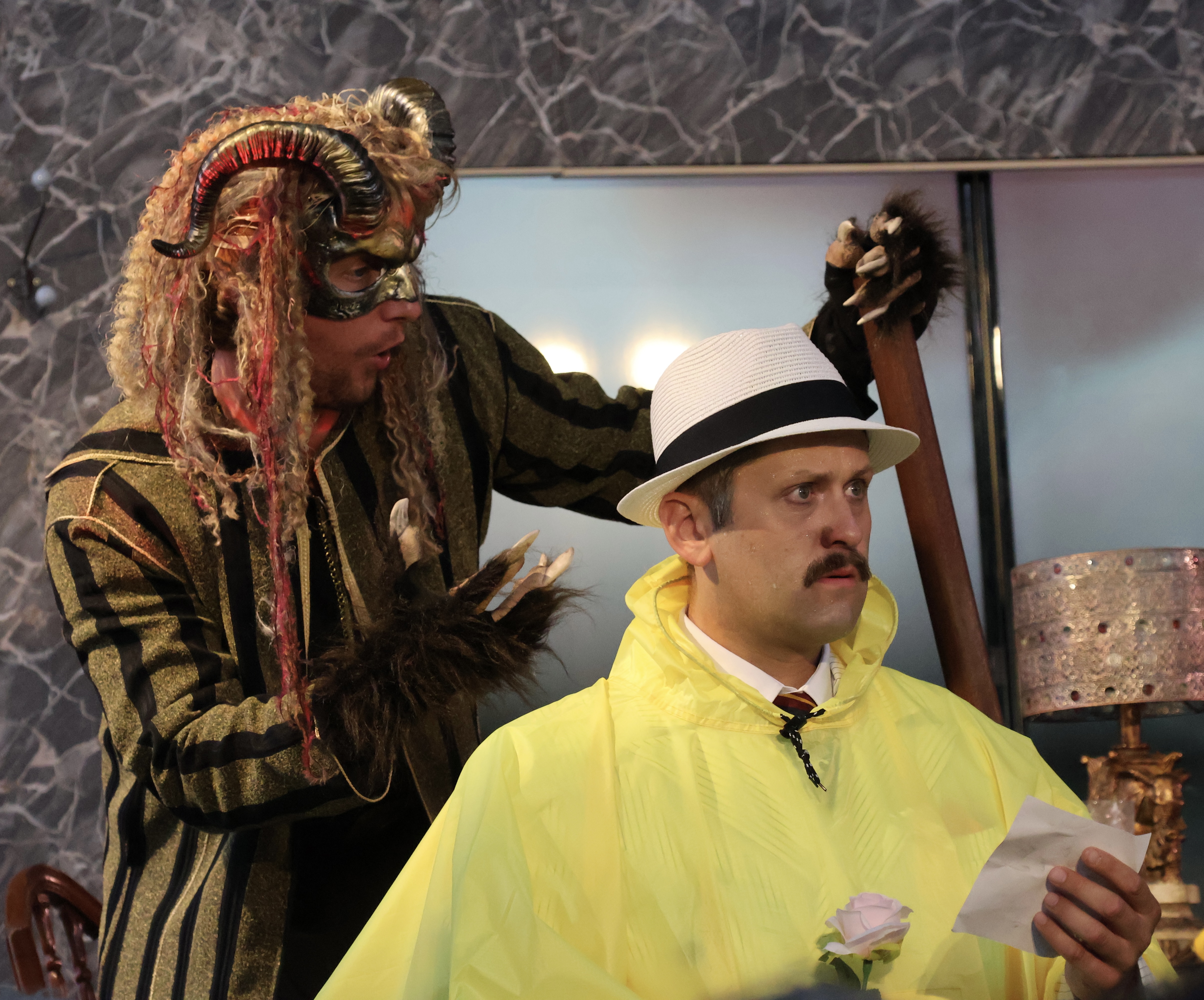
Zémire et Azor was first staged in 1771 as a comédie-ballet with dialogue. Five years later, an Italian adaptation, Zemira e Azor, was presented in Mannheim with recitatives by Ignaz Holzbauer and additional arias by Niccolò Jommelli. It was this version, revived at Schwetzingen in 2023, that Bampton Classical Opera chose to use, translated into lucid and lively English by Gilly French, Jeremy Gray’s co-artistic director. The most celebrated number is the avian showpiece, with flute obbligato, that Zémire sings to delight Azor in Act 3. Here, depicting a winged warbler with paint in addition to words and music, Ffion Edwards performed it with sweetness, grace and pinpoint precision. Over its four acts the opera offers a satisfying variety of arias and ensembles, sensitive to the specificities of situation and emotion. The sombre reflections of Zémire’s father Sander (here Sandro) made a particular impact, though Samuel Pantcheff’s sonorous distinction did not preclude a lightness of touch elsewhere. Portraying his servant Alì with physical agility and vocal acuity, Andrew Irwin displayed hair’s breadth comic judgment, and his two ‘wicked’ daughters – allotted one big solo moment each – were sharply profiled by Siân Dicker (Fatmé/Fatima), who added a glint of polished steel to her vibrant line, and Rachel Roper, whose dark, dappled mezzo lent allure to the more reticent Lisbé (Lesbia). On each of his appearances Gwilym Bowen, singing with both searing intensity and beguiling flexibility, ensured that, despite his hairy, clawed hands, ram’s horns and matted, bleached lock, the audience could sense the loving man behind Azor’s monstrous mask.
The modern instruments of the small orchestra sounded gratifyingly rich and rounded, and the inventiveness of Grétry’s wind writing – which includes ‘magical’ offstage effects – shone out. Through an interpretation informed as much by disciplined energy as by elegance, Andrew Griffiths joined in recounting a fairy tale that cast its enchantment with no hint of preciosity.
charming show... outstanding performers... spot on
British Theatre Guide 18th July 2026
When three years ago, Mannheim opera produced a real mash-up of Gretry’s slight tale of Beauty and the Beast with Disney dwarfs, a Sugar Puff monster and a footballer hero, I thought I would never see a production to do the piece justice. Opera
Bampton Opera and director Jeremy Gray have put that right, with a charming show elevated by two outstanding performers in the title roles, Ffion Edwards as Zemira and Gwilym Bowen as Azor, the prince turned monster.
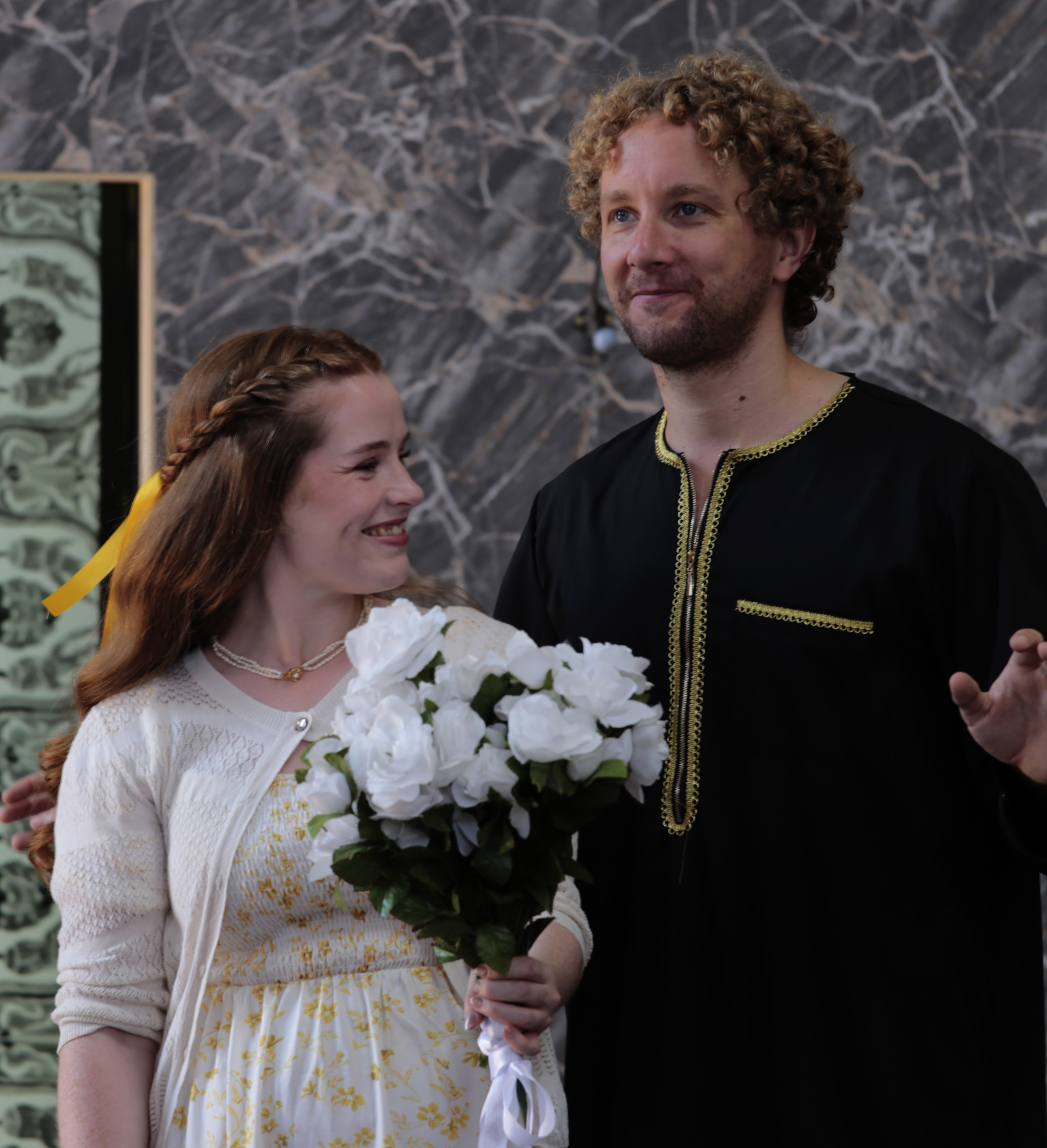
Zemira’s merchant father Sandro (Samuel Pantcheff) with his servant Ali (Andrew Irwin) is marooned in the Gulf of Hormuz (yes that one), held captive by Azor, but allowed to return home to his three daughters Zemira, Fatima (Sian Dicker) and Lesbia (Rachel Roper) if one of them returns as his hostage.
The music, much of it later additions for the original Italian language performance in 1776, also in Mannheim, has a Mozartian feel, albeit without the sophistication that the greater composer’s symphonic experience brought to the orchestration.
Highlights include a highly interactive quartet for Sandro’s family and an off-stage obbligato for horn and flute that complements the final scene, but best of all are the showpiece arias for the principals. Bowen raises the show to a nerve-tingling level with his first entrance, "Beware my furious rage", menace combined with smooth, long legato lines, and a trilling Edwards handles the virtuoso songbird air with great delicacy and poise.
It is not a story of great depth—its appeal at the time largely a result of its magical effects—yet by their mutual reticence, in the scene where suspicion turns gradually to love, the couple achieve a real sense of pathos.
Irwin plays up Ali’s timidity—a model perhaps for Mozart’s Papageno, Pantcheff projects boldly the figure of the merchant, Dicker invests considerable feeling into her act two lament, and Roper sounds ravishing in one of many additions to the score in 1776 from the works of Niccolo Jommelli, the only shortcoming of which is its brevity.
The stage is split in two with Azor’s Persian palace on one side and Sandro’s simple home on the other, and video screens effectively portray the magical connection between the two. Placing the orchestra between them gives it rather undue prominence, but conductor Andrew Griffiths was keenly responsive to the singers and only once did the sound slightly lap over the soloist.
Tribute is due also to Pauline Smith and Anne Baldwin for their character-enhancing costume designs, Ali in cowardly yellow, Zemira resembling Little Red Riding Hood setting out to meet the wolf and Azor best of all, somewhere between cruel and cuddly, like a tabby cat with great claws and ram’s horns. Spot on.
Zemira e Azor is Bampton Classical Opera's current success story and cannot fail to gladden the hearts
Seen and Heard International 20th July 2026
Bampton Classical Opera’s Director, Jeremy Gray searches every year for an opera not frequently heard. Once again, his selection is an excellent one with a geographical setting so very topical! Early 18th-century composers seeking oriental settings to show their colourful and expressive orchestrations discovered Persia and the waterway between the Persian Gulf and the Gulf of Oman – the Strait of Hormuz – appealing to contemporary tastes of the time. With a choice of 2000 folklore stories of the ‘morality lesson’ which is Zemira e Azor, Bampton’s 2026 selection is André Grétry’s 1771 composition, recomposed in Mannheim in 1776, with the Italian libretto by Mattia Verazi. An ingenious English translation by Gilly French and Jeremy Gray, with additional music by Niccoló Jomelli and Ignaz Holbauer, this opera in four acts builds the Bampton Classical Opera’s reputation for fresh and exciting developments. This classic fairy tale teaches the importance of empathy and kindness.
Sir Thomas Beecham, a keen supporter of Grétry’s music, praised him for his grace and melodic invention surpassed only by Mozart. In conductor Andrew Griffith’s hands this production is a musical treat, thanks in no small part to hand-picked musicians capably led by Caroline Balding. Creative offstage contributions by wind and brass players add to the enjoyment of the final act. So too, some extremely effective lighting designed by Ian Chandler and visuals created by David Hudd and Keith Farr. There are two stages, one, the home of Sandro (Samuel Pantcheff) the trader, the other, part of the palace belonging to ‘the beast’ Azor, the Prince of Kamir (Gwilym Bowen). Musicians slot in conveniently between the two stages. A vibrant overture begins the opera as Sandro, the trader loses his vessels in the Strait of Hormuz to the severe storms and lightning in these dangerous waters, depicted musically by excellent horn and bassoon playing. Seeking refuge in Azor’s palace, Sandro with his servant Ali (Andrew Irwin) are caught in the act of attempting to steal a rose as a gift for Zemira his youngest daughter (Ffion Edwards). Azor, the twin-horned ‘beast’ threatens death but relents when a deal is negotiated in which one of three daughters will take their father’s place as a sacrifice!
Baritone Samuel Pantcheff leads an extremely talented cast as the very caring trader father. Siân Dicker (Fatima) is outstanding as one of the spiteful and disgruntled sisters; she soon becomes the leader of the trio, her spinto soprano voice equipping her well for dramatic moments as the seriousness of the potential sacrifice of one of the girls dawns on the trio. The duet in the second act between Dicker (Fatima) and mezzo-soprano Rachel Roper (Lesbia) when they discuss the implications of the sacrifice was noteworthy. Zemira travels with Ali to meet Azor to fulfil her father’s deal.
Tenor Gwilym Bowen (‘the beast’ Azor) is a remarkable discovery by Bampton; his portrayal as ‘the beast’ from the balcony was most convincing as he despairs of his future. He patiently sits for Zemira as she paints his portrait, offers her a magic ring which will release her from his power and arranges for her to be part of the amazing ‘magic picture scene’ in which she sees her father and sisters at their home. Above all, he is charming and, as Zemira impresses him with her tenacity and resilience, Azor to, becomes charmed. The complications of staging the ‘magic picture scene’ are enormous; it worked without a hitch! As offstage wind and brass are conducted by Andrew Griffiths, his harpsichord player Alex Norton takes charge of the remaining string and wind players. The creative direction of Act III is remarkable with the lighting plot designed to remind the audience of the significance of that rose – which caused the controversy – with floods on the ceiling of coloured rose depictions.
This is an opera which merits many a revival. The production has a well-chosen cast always engaging and showing sympathy when required, notably in Act IV as a miserable Sandro (Pantcheff) needs the comfort of Fatima (Dicker) and Lesbia (Roper) who deliver another excellent duet before Zemira (Edwards) returns from the now charmed ‘beast’. Ffion Edwards was proficient as Zemira, Rachel Roper was adept as Lesbia, Siân Dicker was superb as Fatima; all three girls engage in a family row which ends abruptly when Zemira (Edwards) casts off her magic ring and disappears, soon to reappear alongside Azor at his palace. The happy end to the fairytale is in sight! Gone is ‘the beast’s’ ugly twin-horned costume; replaced by an elegant long coat as the count reflects on the success of the ‘magic picture scene’, with offstage flutes echoing the onstage strings. Andrew Irwin’s busy interpretation of Ali the servant, a role he has clearly enjoyed, culminates in a most humorous fourth-act appearance as an angel clasping a bunch of roses, soon to utter the immortal words ‘may you live happily ever after’ to Azor and Zemira! Fireworks appear on the screens of the ‘magic picture scene’ and the happy ending is complete.
Bampton Classical Opera has delivered another delightful achievement.
A magical fairytale revival
The Oxfordshire Guardian 21st July 2026
Bampton Classical Opera’s rarely heard Zemira e Azor proved an absolute delight at Cokethorpe School, combining glorious music, playful staging and a beautifully accessible take on the Beauty and the Beast story.
This was a rare opportunity to hear a work that once travelled widely across Europe but is now seldom staged in Britain. Bampton Classical Opera presented a version based on the 1776 Italian edition, with additional music by Ignaz Holzbauer and Niccolò Jommelli, sung in a new English translation by Gilly French.
That scholarly detail might make the evening sound specialist. In practice, it was anything but remote. The production was warm, funny, generous and unexpectedly immediate, proving once again how skilfully Bampton can make rarely performed 18th-century opera feel alive for modern audiences.
The opening performances took place at Cokethorpe School, near Witney, a new venue for Bampton Classical Opera. The setting worked beautifully. The production unfolded across two stages, while also making use of the balcony and, at times, the audience seating area. That gave the evening a sense of movement and intimacy, with the story seeming to grow out of the room rather than being kept at a polite distance. There was also something special about being so close to the orchestra. Watching Andrew Griffiths shape Grétry’s score was a pleasure in itself, and the Orchestra of Bampton Classical Opera played with elegance, brightness and affection throughout. For a semi-staged production, it felt remarkably vivid. The performance had theatrical imagination without losing sight of the music.
Zemira offers herself in place of her father as a prisoner in the magical castle of Azor, a prince transformed into a terrifying beast by a fairy’s curse. At first she is horrified by his appearance, but gradually sees the dignity, tenderness and nobility beneath the surface. When she finally declares her love, the spell is broken.
Director Jeremy Gray gave the piece a playful modern edge. Bright yellow cagoules, matching rubber gloves and even a copy of Just Seventeen magazine brought flashes of contemporary humour into the fairytale world.
Those choices could have jarred with the period score, but instead they gave the production a mischievous lightness. The comedy never mocked the music. It opened a door for the audience, making the opera feel approachable without flattening its emotional shape.
The cast was excellent throughout, mixing returning Bampton performers with company debuts. Ffion Edwards brought sincerity, warmth and vocal clarity to Zemira. Her performance made the character’s compassion feel active rather than passive, giving the heroine a quiet strength as she moved from fear to understanding. Gwilym Bowen was both imposing and sympathetic as Azor. He captured the loneliness and strangeness of the cursed prince, while allowing enough tenderness through the disguise for Zemira’s change of heart to feel believable. Their scenes together were among the evening’s strongest, giving the opera its emotional centre.
Rachel Roper was delightful as Lesbia, while Siân Dicker repeatedly stole scenes with a wonderfully dry and expressive Fatima Andrew Irwin brought infectious comic energy to Ali, making every entrance count, while Samuel Pantcheff completed the principal cast with authority as Sandro.
The ensemble balance was one of the production’s pleasures. Nobody overplayed the comedy, but everyone understood its rhythm. The result was light, lively and precise, with enough theatrical sparkle to keep the audience smiling without losing the opera’s fairytale tenderness.
Bampton Classical Opera has built its reputation on rescuing rarely heard works from the late 18th century and presenting them in clear, lively English translations. Zemira e Azor is exactly the kind of piece that justifies that mission. It is not merely a curiosity. It is melodically charming, theatrically generous and full of feeling.
The production also showed how a company can bring scholarship and entertainment together. The rarity of the edition mattered, but so did the laughter, the performances, the costumes, the staging and the sheer pleasure of hearing a score that deserves more attention. At Cokethorpe, the result was a magical evening, and a strong argument for why these rediscoveries matter. It took a rarely staged opera and made it feel fresh, accessible and full of theatrical life. The English text allowed the story to land clearly, and the cast gave the fairytale both humour and heart.
For anyone who thinks 18th-century opera might feel distant, this production is a persuasive answer. It was warm, playful and quietly magical.
Sincere commitment to the score… Bampton Classical Opera delivers a staging with wit and charm
The Stage 20th July 2026
If you only know Beauty and the Beast from the 1991 Disney version, you may not realise that the original story dates from the mid-18th century, and has been retold multiple times. It’s the basis of this opera by André Grétry, which was massively popular following its premiere in 1771.
Dancing teapots aren’t in evidence in Bampton Classical Opera’s production, directed by Jeremy Gray, but there’s much wit and energy here, as well as a sincere commitment to the charming score.
The company has been championing lesser-known or forgotten (sometimes with good reason) operas for more than 30 years at the Deanery Garden in Bampton. This year, they’ve shifted to Cokethorpe School, near Witney. The change from the outdoors picnic atmosphere of Bampton to an indoors school setting is all to the benefit of performers and audience. Sight lines and sound are vastly improved, and the risk of a mid-performance downpour is gone.
The Cokethorpe motto ‘Inopiam Ingenio Pensant’ (‘Ingenuity overcomes scarcity’) is emblazoned on a balcony in the hall. It seems an equally appropriate sentiment for a company that survives on shoestring budgets while bolstering the careers of young and upcoming singers. In Gray’s produciton, performers are periodically up on that balcony, but most of the action takes place on two small stages on the floor, with the first-rate orchestra (confidently conducted by Andrew Griffiths) positioned in between.
As Zemira (Beauty) and Azor (the Beast), Ffion Edwards and Gwilym Bowen are convincing in their growing mutual attraction, despite the obvious obstacle of Azor’s beastly behavior and his hirsute façade: a goat-like headdress and bear paws (costumes by Pauline Smith and Anne Baldwin).
Edwards essays the treacherous heights of coloratura role with aplomb. As Sandro, Zemira’s father, Samuel Pantcheff is touching in his mixture of guilt for having gotten into this mess and his desire to protect his three daughters. Rachel Roper and Siân Dicker have great fun as Zemira’s eye-rolling older sisters, Lesbia and Fatima, who join their sister in the famous trio.
There are issues with diction for some of the singers – unfortunate, given the new indoor venue and the use of an English translation by co-artistic director Gilly French. Andrew Irwin as Sandro’s servant, Ali, is vocally on point and embraces the comic nature of the character. He shines in an Act II duet with Zemira, as the two return to Azor’s castle.
Grétry’s opera took Europe by storm in the 1770s – Catherine the Great named her favourite greyhound Zemira. Audiences were entranced by its exotic setting – Persia, near the Gulf of Hormuz (a painfully resonant location in our time), and a stage effect that sees Zemira and Azor gaze at a ‘magic picture’ of Zemira’s family as they worry over the missing Zemira.
That magic is accomplished here by video screens, which presumably will be along for performances later in the year at Westonbirt Orangery in Gloucestershire and Smith Square Hall, London.
Music-making of the highest order
dailyinfo 20th July 2026
Gretry is a composer who has not reached the same heights of popularity of many of his contemporaries of the mid to late eighteenth century. It is thus fantastic that Oxfordshire is home to Bampton Classical Opera – a company dedicated to reviving lesser known works by musicians of this period.
Zemira e Azor is, essentially, a retelling of Beauty and the Beast. A father, Sandro, stumbles across an enchanted palace. This angers the owner, Azor, a hideous monster of a man, who threatens Sandro's life unless he is willing to send one of his daughters in his place. The father is horrified at such a prospect but accepts the bargain as a way of ensuring his escape. His youngest daughter, Zemira, discovers the details of the deal and runs off to the palace determined to save her father.
She meets Azor and an unexpected bond is formed and after the traditional obstacles are overcome, the curse turning Azor into a Beast is lifted and they all live happily ever after.
Musically, there is absolutely much to admire. It is a a lyrical and beautifully orchestrated opera-comique with many gorgeous moments shared between the singers and members of the chamber ensemble.
Andrew Griffiths conducts with the right balance of flair and precision necessary for music of this period. He shapes everything with care and allows both musicians and singers space to shine.
There is not a weak link in the cast. In the title roles, Ffion Edwards and Gwilym Bowen showcase their voices to perfection, handling the challenging demands of the score with apparent ease. Samuel Pantcheff (Sandro) has a rich, warm sound that is right for the part, which has one of the largest ranges of any baritone role in the repertoire.
Andrew Irwin uses his bright, characterful tenor to deliver much humour and personality to the role of the servant, Ali. And the cast is rounded out by the two other sisters. Lesbia (Rachel Roper) and Fatima (Sian Dicker) who blend their voices perfectly in what are, sadly, underwritten and underused roles.
This is music making of the highest order and whilst the material is not hugely memorable, it is a delight to hear performed so well.
For all the beauty and elegance of the score, it is a opera with many issues in terms of the plot and the drama. It is lacking in drama and tension with key moments, like the departure of Zemira, not even shown on stage only reported by other characters. It is not uncommon for operas to lacking dramaturgically speaking but, that said, the beauty of the music does mask some of these shortcomings.
The venue, Cokethorpe School, has many virtues – it is a lovely environment with more than adequate parking and plenty of space in which to enjoy a summer evening. The auditorium is not ideal for a theatrical presentation. Because it lacks a proper stage, the orchestra is on the same level as the singers and thus sight lines are badly compromised meaning that large parts of the action are obscured to significant sections of the audience. The staging is inventive with good use of technology to move things along. But the fact that the whole audience could not see all of the action is to be regretted.
All in all, there is absolutely much to enjoy. Bampton Classical Opera is a gem that should be cherished for doing what it does so well.
Joy and vitality
Classical Music Daily 3rd August 2026
Amongst England's summer opera companies, there's no doubt Bampton Classical Opera is one of the most enchanting, original and unique...
Co-founder Jeremy Gray has evolved a marvellously idiosyncratic house style: his stagings are full of the teasing and unpredictable, the cheeky and unflappable, so that every Bampton staging emerges chock-full of clever and artful ideas: plots are invariably fast-moving and zany; moves are slick and dotty and finessed; characters are just as humorous: he has a gift for turning harmless types into irrepressible, energetic and vigorous personalities; or into hopeless, clumsy, disaster-prone idiots.
not only does Bampton perform in English, but it does so in brand new translations made by co-founder Gilly French. These joyous versions have everything to applaud about them. They are fabulously entertaining. loaded with skilfully devised comic detail, full of splendid rhymes, scrupulously accurate, meticulously abreast of all the subtleties and secrets and clever intricacies of the original, in fact expert in every way. Cheekiness, flair, ribaldry, impishness, bustling energy, naughtiness - these are the Bampton preserve. These supremely desirable versions really do deserve preserving.
Bampton's speciality - unique in the UK - has always been to revive composers and works that have - sometimes inexplicably - faded from the repertoire. Their initiative in this respect is staggering. They do a massive service by enlarging and tremendously enhancing our view of the repertoire
Typically, there's masses of fun in this latest, classic Bampton production. It's teasing and hilarious from the very start
Soon we meet the hyperactive Ali's hard-pressed master, Sandro (Samuel Pantcheff) whose agonies over his appalling material losses - like Antonio in The Merchant of Venice, his ships have been wrecked - are naturally all the greater. Pantcheff shone in all respects: capable in recitative, distinctive in each of his smooth-flowing, appetising arias.
Bowen, superbly characterised in the role, edgy, snarling, aggressive, is unremittingly terrifying.
Fatima's beautifully crafted aria (soprano Siân Dicker) unexpectedly lends the Act character. Hers - the music in a couple of places in this opera was, for whatever reason, borrowed or poached from Italian Niccolò Jommelli, 1714-74 - was palpably a highlight of the entire music.
[Zemira] is enchanted and unexpectedly thrilled, responding with a truly gorgeous extended, melodious aria, with horns and high-reaching flute, that evokes a rapturous songbird.
Lesbia (mezzo Rachel Roper), tries to allay things and calm everyone's mood (another superb moment)
impeccably balanced by excellent conductor and finessed continuo provider Andrew Griffiths.
What was clear was the joy and vitality that, as always, Bampton Classical Opera brought to yet another stagework. If anyone could bring to life the Mozart-like qualities lurking within it, they certainly could.
(for the complete, lengthy article, please follow this link).
What the audience said
The performance last night was superlative. You showed such ingenuity in the use of the space at Cokethorpe. The two stages, the placement of the orchestra between and their performance of such unfamiliar music, the light projection on the ceiling, the use of ‘live streaming’, the costumes, the direction, the libretto, the casting and the voices were all magnificent… I was about to type ‘onward and upward’ but I wonder how in the world you can improve on such a magnificent performance.
a delightful piece with gorgeous music, excellent cast, direction and a very singable translation
Last night's performance was a magnificent success… most particularly in promoting enjoyment and understanding of the music, which was sung and played with real brilliance
Atmospheric music, perfectly attune to the story and scenes, particularly the thunder and lightning. Fantastic voices. Brilliant Azor costume. Creative split scene production and technical effects.
The last opera I saw was Tosca at Glyndebourne. I enjoyed Monday [at Westonbirt] more.